One of the biggest things we do at Inara is to really dig into what it means for something to be a sign of Allah. One of the many points that students learn is that meaning is central to the study of nature. We like to ask our students what they would say if they knew of a Hafiz of the Quran who went her whole life without ever knowing the meaning of a single word of the Quran. Does she have knowledge? Yes. Are they blessed and will they be rewarded? Insha Allah, definitely! But are they missing the main point? Unfortunately, yes.
We then turn their attention to the commonly known fact that just as Allah refers to His verses in the Quran as “ayat”, He also refers to “everything in the heavens and the earth” as His ayat—His signs. Since anyone would consider a Hafiz who does not know the meaning of any of the ayat to have missed the main point of the Quran, what would one say if one has memorized innumerable scientific facts, mathematical formulas that describe certain aspects of nature, but never understand their meanings? They too, have missed the point. In other words, at this time, studying nature through current science pedagogy misses the point!
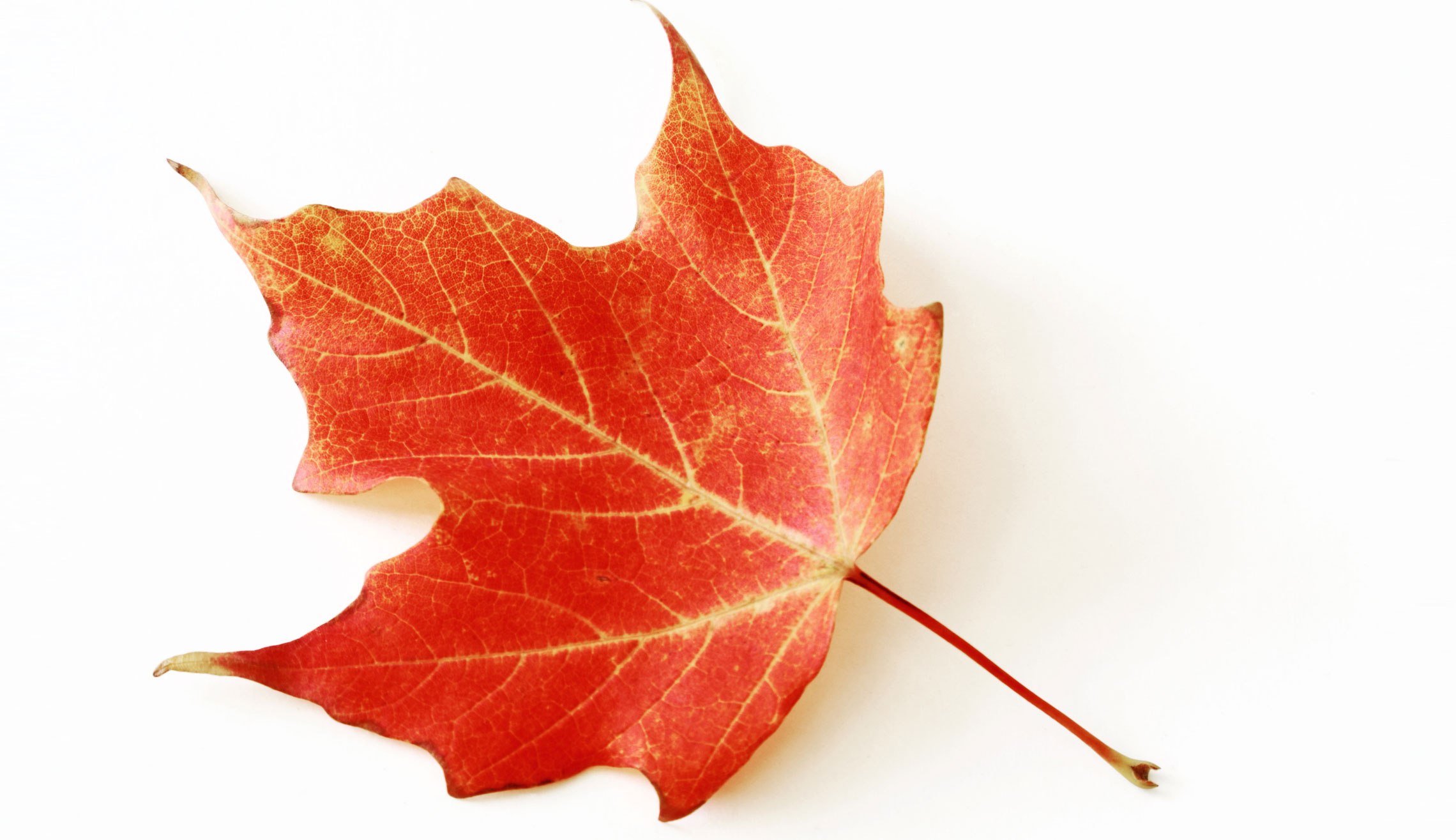
We like to express this at Inara by holding up a leaf and asking our students:
“What is the meaning of this leaf?”
Usually, we get blank stares. (At least at the beginning).
And everyone agrees that it sounds like an odd question; yet everyone also agrees that given that it is an ayah/sign, it shouldn’t be an odd question.
But the students are not really sure where to go after that.
Alhamdulillah, for my co-op students, the ones who have taken Inara Foundations and Introduction to Sciences, they have a framework for how to answer that ever important question in a manner that makes organic connections between their knowledge of revelation and their knowledge of the natural world, beyond “it means Allah is powerful” (even though of course that is true!)
In our Inara Biology class, for example, in our section on cell division, we went covered meiosis, which describes the way our cells prepare to become the reproductive cells of the male and the female. It describes how the copies of chromosomes line up in the middle of the cell at random, and then when the cell splits, the chromosome copies split in half, each into one of two new cells. Biology texts will explain how this random lining up of chromosomes is what results in the uniqueness of each and every individual.
On first glance, a Muslim learner may be taken aback by this fact – that at the physical level our uniqueness is related to a random process. Indeed, it seems that current science writers and commentators take delight in pointing that out (because of certain problems they have adopted from Western intellectual history).
But Inara learners know that everything in the biology text is bursting with meaning, including randomness!
Randomness is a sign of Allah.
Inara students gradually learn how to see the meanings that are present within even the driest, scientistic Biology textbooks. At Inara we aim to equip every Muslim learner with a thorough-going, evidence-based framework that allows them to read the meanings of creation—meanings that ultimately return to Allah.
Take a look this excerpt (lightly edited) from an essay one of our students wrote for an assignment, “What is the Meaning of Randomness?” After we had a fascinating discussion in class, they were given this assignment.